
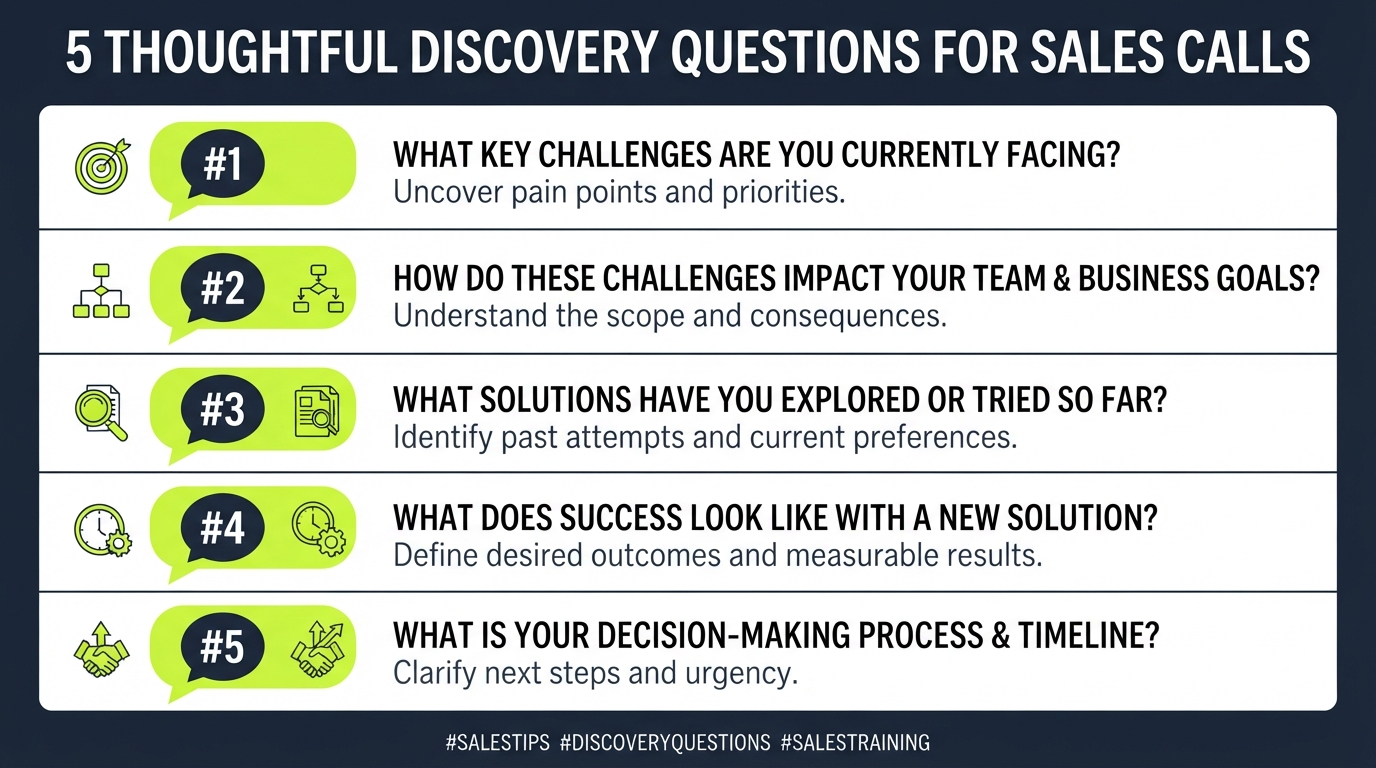
Stalled Discovery Call Questions: 5 Sales Prompts to Restart the Conversation
Picture this: You're midway through a discovery call, probing for pain points, when the prospect goes radio silent. Your stalled discovery call questions hang in the air, unanswered. The energy drains, and you sense the deal slipping away. Every sales rep has been there—those quiet moments that test your grit and ingenuity.
Stalled discovery calls aren't failures; they're pivot points. The key lies in deploying the right discovery call questions sales pros rely on to reignite momentum. These aren't generic icebreakers. They're precision prompts designed to draw out hidden needs, shift the frame, and uncover opportunities you didn't see coming.
In this guide, we'll unpack five battle-tested sales conversation restart prompts. For each, you'll get the rationale behind why it works, the ideal timing to drop it, and the subtle cues to listen for in their response. Master these, and you'll turn dead air into dynamic dialogue.
Why Discovery Calls Stall—and How to Spot the Signs
Discovery calls falter for predictable reasons: prospects feel interrogated, questions miss the mark, or trust hasn't built yet. Silence signals disengagement, but it also hides gold—unspoken frustrations waiting to surface.
Spot the stall early: short answers, filler words like "um," or deflections. That's your cue for a better sales discovery questions strategy. Don't push harder; pivot smarter.
5 Stalled Discovery Call Questions to Reignite the Fire
Here are five stalled discovery call questions that cut through the quiet. Use them surgically to refocus on value.
“What’s the one thing keeping you up at night when it comes to [their core challenge]?”
Why it works: This prompt personalizes the pain, inviting emotional investment over factual recitation. It reframes the conversation around their urgency, making you a confidant, not a vendor.
When to use it: Early stall, after initial qualifying questions, when responses feel rote.
What to listen for: Emotional language (frustration, exhaustion), specifics on impact (lost revenue, team burnout), or timelines (“next quarter”). These signal budget and buying intent.
“Walk me through the last time this issue really bit you— what happened next?”
Why it works: Storytelling unlocks details dry questions can't. It builds rapport through narrative and reveals process gaps.
When to use it: Mid-call lull, post-problem acknowledgment, to deepen context.
What to listen for: Sequence of events, workarounds attempted, outcomes (positive or failures). Note decision-makers mentioned or recurring patterns.
“If nothing changes in the next six months, what does that look like for your team?”
Why it works: Future-pacing amplifies consequences, creating urgency without pressure. It shifts from problem to vision gap.
When to use it: When pain points are vague; late in discovery to qualify commitment.
What to listen for: Quantifiable risks (metrics dropping, headcount cuts), emotional stakes (“team morale tanks”). Hesitation here often means low priority.
“How is this affecting your day-to-day priorities right now?”
Why it works: It connects abstract issues to immediate realities, grounding the talk in their world.
When to use it: After broad challenges surface, to drill into relevance.
What to listen for: Time sinks, competing initiatives, or resource drains. Positive shifts indicate alignment with your solution.
“What would an ideal outcome look like if we solved this together?”
Why it works: Collaborative phrasing builds partnership; it surfaces criteria for success.
When to use it: Closing the discovery, transitioning to next steps.
What to listen for: Measurable goals, timelines, stakeholders. Vague answers? Probe for clarity.
Sharpen These Prompts with ExecPitch
Practice makes permanent. ExecPitch by Executive Growth Group equips solo sales reps to master better sales discovery questions. It's microphone-only listening—no Zoom, dialer, or system audio capture, no speaker ID. Raw audio and live transcripts aren't saved, ensuring privacy (see privacy policy, data practices, terms).
Key features for stalled calls: Know what to say next with real-time guidance. Build reusable campaigns and shared company knowledge saved to your account. Add private notes. Toggle Calls vs Meetings modes, 1:1 or boardroom setups, even practice mode for solo drills. No team dashboard—it's your private edge.
Sample private debrief structure:
- Prompt Used: Log the question and timing.
- Response Highlights: Key phrases, pain indicators.
- What to Say Next: ExecPitch suggestions.
- Private Notes: Follow-ups, objections.
“Prospect lit up on timeline pressure—next: demo ROI calc.”
Turn Stalls into Sales Momentum
Next stalled discovery? Breathe, deploy one of these sales conversation restart prompts, and listen like your quota depends on it—because it does. Pair with ExecPitch, and you'll not just restart calls; you'll own them. The silence breaks. The deal advances.